Why B2B deals stall: the hidden buyer you never meet
More than 40% of B2B deals stall. Often a quiet finance, legal or operations voice is the reason. Here is how a consultant can be known to them.

A B2B deal often stalls because someone you never met disagrees with the person you did. LinkedIn and Edelman call these people hidden buyers, and their research says more than 40% of B2B deals stall because buying groups are not aligned.
You can do good work, run a great first call and still lose. The person who loved you may simply not have a way to convince the quiet colleague in finance, legal or operations. This article explains who that colleague is, what they read, and what a busy consultant can do about it without pitching anyone.
Why do so many B2B deals stall after a good first call?
Most firms buy as a group, not as one person. The person who calls you is rarely the only one who decides.
Edelman and LinkedIn surveyed business executives for their 2025 B2B Thought Leadership Impact Report. It found that more than 40% of B2B deals stall because the buying group is not aligned. LinkedIn names hidden buyers as a major cause.
A US agency owner can feel this after a proposal goes quiet. A UK consultant feels it when a "yes" turns into "we need to check a few things internally". Often those things are being checked by a person you have never spoken to.
Who are hidden buyers, and why do they matter to a small consultancy?
Hidden buyers are the people in finance, legal, compliance, procurement or operations who may not use your service or sign the contract, but who hold real power over whether you win. That is Edelman's description.
They matter more to a small firm than to a large one. A big vendor has a famous name that calms nervous colleagues. You probably do not. When nobody in the room has heard of you, the quiet voice has no reason to say "this seems fine".
LinkedIn makes a useful point here. Hidden buyers are less likely to take sales meetings or follow your brand, so they usually know less about who you are. LinkedIn says that dynamic can help lesser-known firms, because expert content can reach people that sales cannot.
What do hidden buyers actually read and trust?
They read more than you might expect. Edelman found that 63% of hidden buyers spend more than an hour a week reading thought leadership, close to the share of the main buyers. By thought leadership, the report means expert ideas and insight, not sales material.
Three more findings from the same report matter for a consultant:
- 71% of hidden buyers say they have little or no interaction with sales teams.
- 81% say high-quality thought leadership helps them see challenges or opportunities they had not noticed before.
- 79% say they are more likely to advocate for a proposal if the vendor consistently produces high-quality thought leadership.
Notice what they do not ask for. They do not ask for a pitch. They ask for substance. When Edelman asked what matters most at purchase, understanding of the business challenge came first, and "the safest choice" came last.
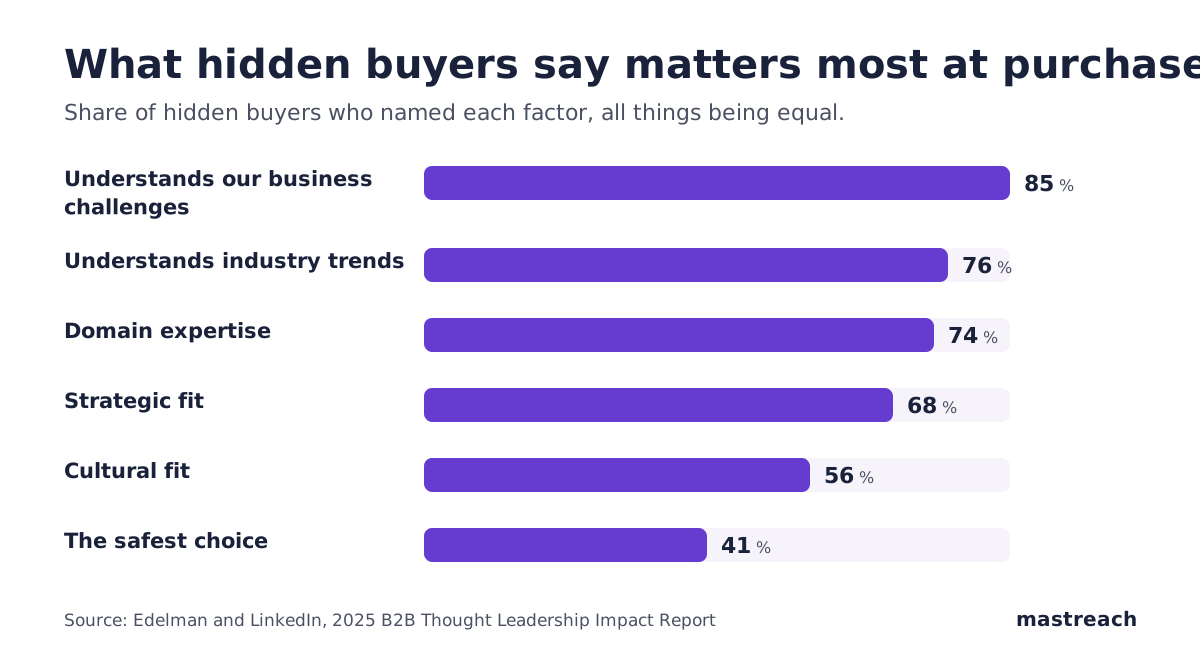
This is good news for a small firm. You cannot out-brand a global vendor. You can show that you understand the problem better.
How can a founder or consultant become known to people they never meet?
You cannot email a hidden buyer, and you should not try. They have chosen not to talk to sellers. What you can do is be useful in the places where they already read.
Here is a simple routine a busy person can follow:
- Work out who the quiet voices are. For your service, who else would be asked? A finance lead? A compliance manager? An operations head? Write down two job titles.
- Find the posts they read. Look for posts on their topics, by people they respect. Our reading is that this is where they spend their reading time, but only you can confirm it for your market.
- Add one specific point. A short comment drawn from real work: a number you have seen, a mistake you have fixed, a question worth asking. No link, no offer.
- Stay on one subject. If you comment on finance risk this week and brand design next week, nobody remembers you. Our article on picking one subject explains why.
- Check your profile. A curious reader will click your name. The headline should say who you help and what changes for them.
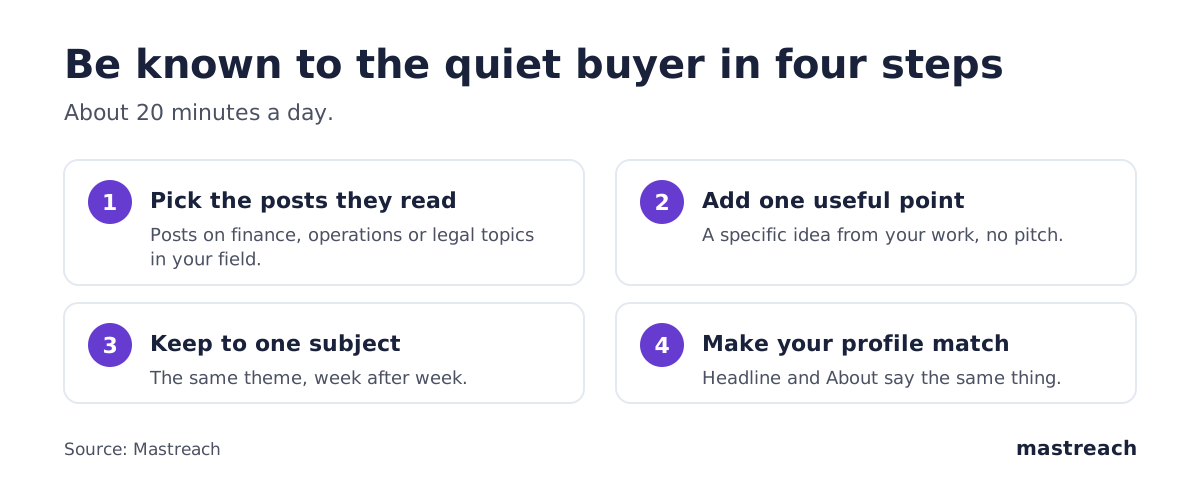
A Dubai advisory firm, an Indian founder selling to US clients and an Australian coach would each follow the same pattern. Only the job titles and topics change.
Where do thoughtful comments fit next to your own posts?
Your own posts reach people who already follow you. Hidden buyers usually do not. LinkedIn says they are less likely to follow your brand.
A comment sits under someone else's post, so it is seen by that post's readers. In the data we shared earlier, 914 comments drafted in Mastreach and then posted earned 177,931 impressions, about 195 per comment. Impressions are not unique people, since repeat views and your own views count. We also have no comparison with the same accounts before they used Mastreach, so we cannot say how much of that was new reach. Our reading is only that comments are a way to be seen by readers outside your own audience.
This is not a claim that a comment turns into a client. It is a claim that a comment is a cheap way to be a familiar name before anyone has to decide. Posts still matter, because they show your thinking in full. Comments carry that thinking to new readers.
If you want to know how comment views are counted, see how LinkedIn comment impressions work.
What should your profile say when a hidden buyer checks it?
Assume the quiet buyer will look you up for about thirty seconds. They want to know if you understand their world.
Make three things easy to see:
- Who you help, in the headline, in words a finance or legal person would use.
- One clear sentence in About about the problem you solve.
- One piece of proof, such as a short case or a checklist in Featured.
Avoid jargon from your own field. A hidden buyer is often a specialist in a different field, so plain words win.
How do you tell if it is working?
Do not expect a message saying "I am a hidden buyer and I read your comment". Signs are quieter.
- Your main contact starts repeating your phrases in internal discussions.
- People you do not know view your profile.
- A buyer says "someone on our team mentioned you".
- Proposals stall less often at the final review.
Keep a simple note each month. Record which posts you commented on and any of these signs. After three months you will see a pattern. Do not expect results in a week. Edelman's finding is about consistent quality, not a single clever comment.
Where Mastreach fits
You cannot email a finance director you have never met. You can be the useful voice under the posts they read. Mastreach helps a small firm do that every week without it becoming a second job.
- It finds the posts. Mastreach shows you LinkedIn posts in your subject that your buyers, and the people around them, are reading.
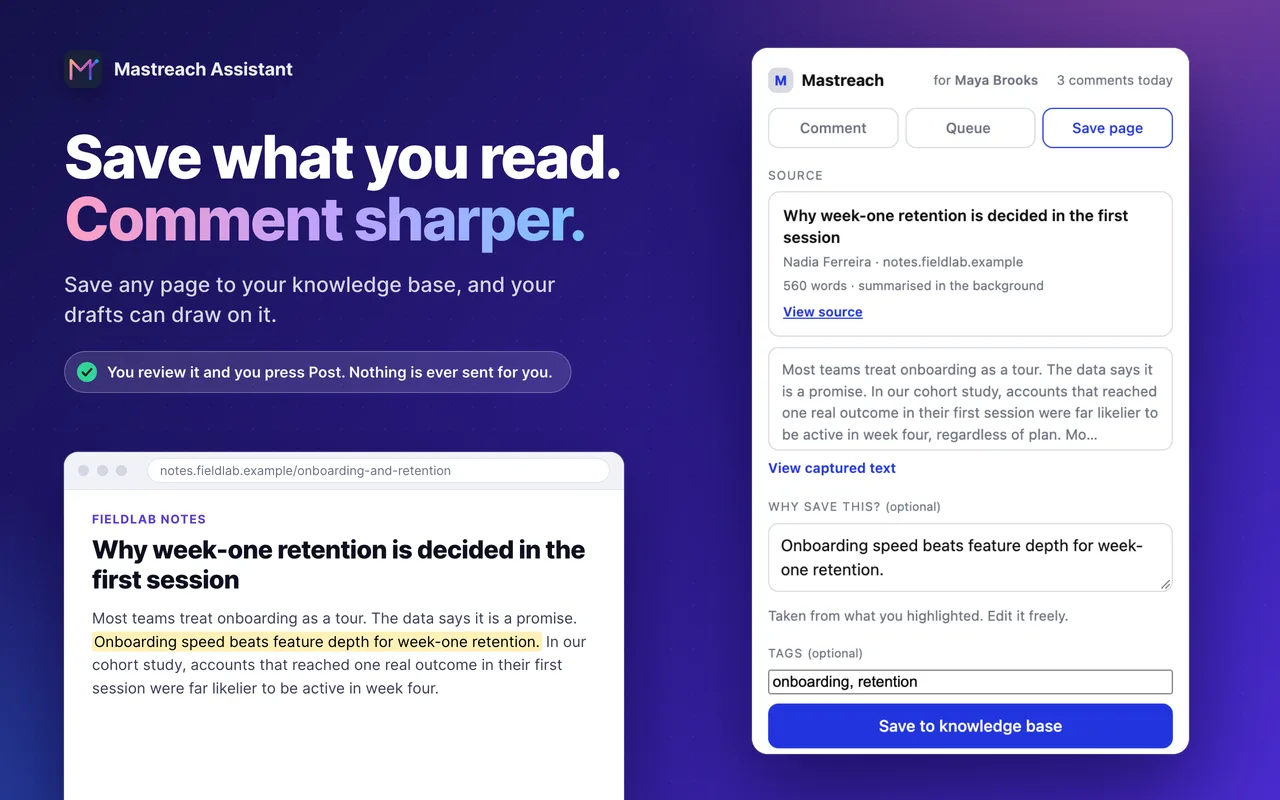
- It drafts from what you know. Save articles and notes to your knowledge base, and your comment drafts can draw on them, so each comment carries a real point.
- It shows the reach. It adds up the impressions your comments earn, so you can see whether you are being read.
You read, edit and post every comment yourself; nothing is sent for you. There is a 5-day free trial.
FAQ
What is a hidden buyer?
A hidden buyer is someone in finance, legal, compliance, procurement or operations who influences a purchase but is often not in sales conversations. According to Edelman, they may not use your product or sign the contract, yet they can decide whether you win.
Can a small consultancy really reach hidden buyers?
Yes, though you cannot target them directly. LinkedIn notes that they follow brands less and take fewer sales meetings, so you reach them through useful content in public places. Helpful comments on posts they read are one low-effort way to do this.
Should I send hidden buyers a connection request with a pitch?
No. The research says they want substance and avoid sellers. A pitch is likely to confirm their reasons for staying hidden. Be useful in public and let them come to you.
Does this research prove comments win deals?
No. The Edelman and LinkedIn report is about thought leadership in general, not comments. Applying it to comments is our reading. The same report is based on a survey, so it shows what buyers say, not what they do.
Sources
See what your own comments are reaching.
Mastreach finds the LinkedIn posts your buyers are reading, drafts a comment in your voice, and counts the impressions LinkedIn never adds up for you. You post every comment yourself.
- 914 comments drafted with Mastreach and posted by their owners
- 177,931 LinkedIn impressions on those comments, August to September 2026